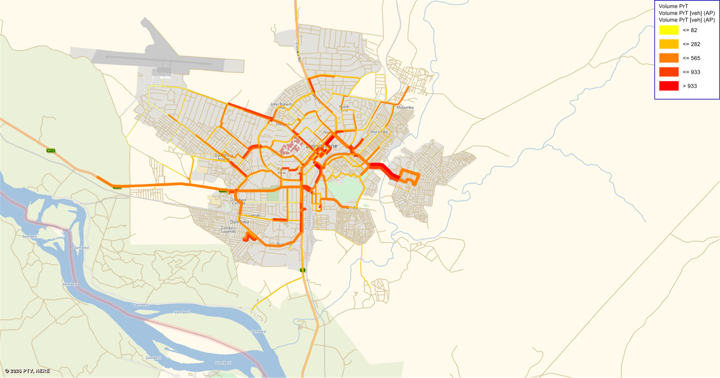
An integrated citywide cycle network was designed in Livingstone, regarded as Zambia’s tourism capital, to support cycling with safe and continuous infrastructure. Located 11 km from Victoria Falls and 7 km from Harry Mwaanga Nkumbula Airport, the city’s street infrastructure was characterised by inadequate lighting, limited pedestrian space, the absence of segregated cycle lanes and insufficient junction treatments.
At the same time, cycling was playing an increasingly important role both in everyday journeys by local communities and in small-scale trade towards the Zimbabwe border. The study was undertaken as part of the World Bank-financed Zambia Green, Resilient and Transformative Tourism Development Project (GREAT-TDP), in collaboration with the Ministry of Tourism and Livingstone Municipality.
A Demand-Led Design Process
The process was structured around observed demand. A needs assessment based on cycle counts and stakeholder consultations was followed by route selection informed by topography, traffic patterns, land use and tourism destinations. Approved routes were then developed into detailed plans and cross-sections.
The network combined shared and segregated sections according to levels of use and risk, with the degree of separation justified for each segment. As part of Livingstone lies within Mosi-oa-Tunya National Park, safety was considered not only in relation to traffic but also to the risk of human–wildlife conflict.
The scope included information and warning signage, road markings, lighting, fencing where required, bicycle parking, and adjustments to existing pavements and kerb lines. At least two costed options were developed for each design parameter.
Deliverables and Capacity Transfer
The four-and-a-half-month commission concluded with the delivery of a needs assessment report and cycle network plan, an Environmental and Social Impact Assessment and Environmental and Social Management Plan, a final design report with drawing appendices, an implementation strategy including phasing and phase-based costing, and a bicycle-sharing system report.
The bicycle-sharing proposal addressed demand analysis, station siting, technology and digital platform parameters, the financial model and a concept for private-sector participation. It was structured to support not only implementation but also the system’s sustainable long-term operation.
Institutional capacity transfer formed part of the process, with public-sector engineers embedded alongside the design team in a shadowing role and two full-day training sessions provided.