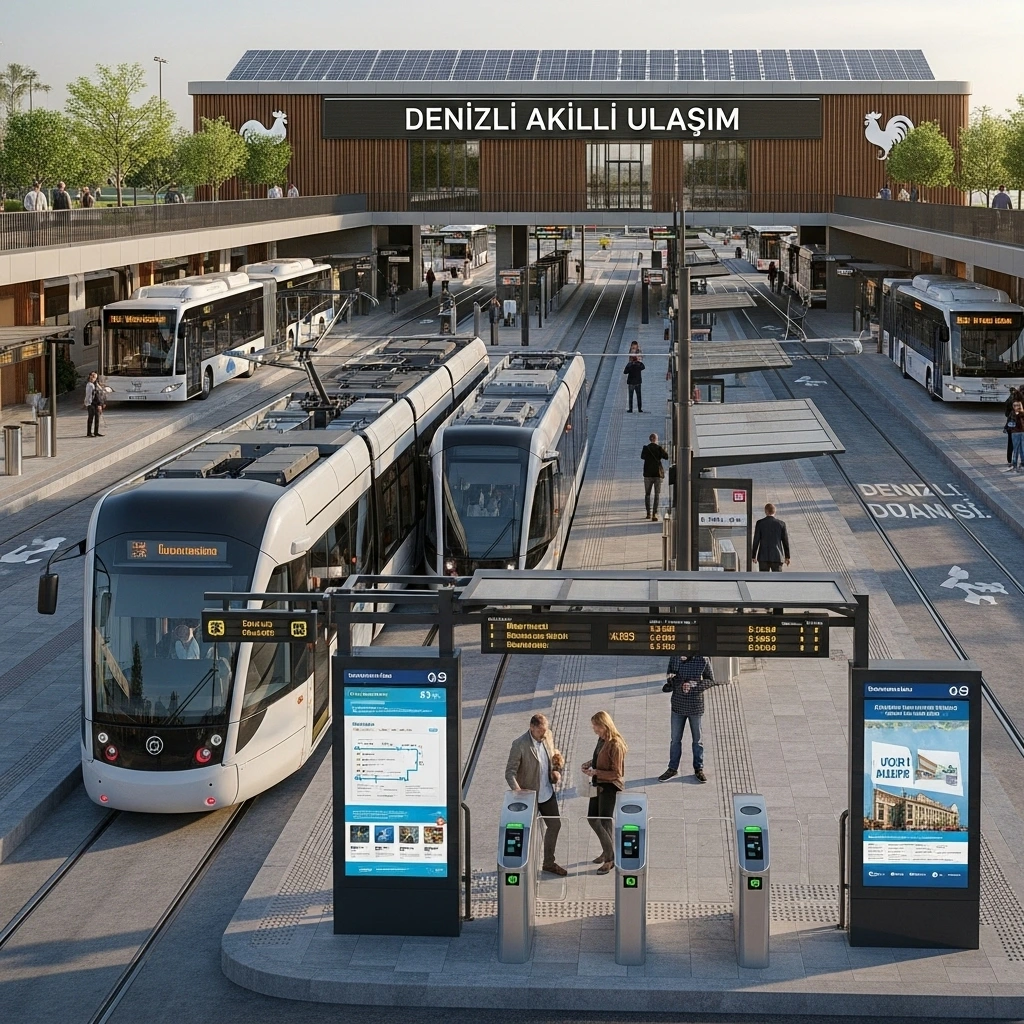
Within the scope of the project, the Intelligent Transportation Systems Strategy and Action Plan for Denizli and the proposed ITS architecture based on it have been prepared and brought to an approvable fiction. This output package started with the Current Situation Analysis Report, followed by the ITS Vision Report and Urban Transportation Strategy Report. The engineering backbone of this package was the ITS Architecture Document, which is aligned with the national architecture and aligned with EU frameworks, while the operationalization of the strategy was completed with the Implementation Plan / Measures Report, which includes prioritized action sets.
On the operational side, the structure of the Traffic Management Center (TCC) in Denizli was transformed and made operational; the organization chart for the TCC, role-responsibility-KPI sets for each position, Procedure Manual describing the processes step by step and ideal professional profile definitions were delivered. For institutional sustainability, the Training Needs Analysis Report, capacity building plan for TYM staff, separate capacity plan for SDUP development competency, implemented trainings and study visits to two EU cities were completed. As the most critical operational output, passenger/driver information and safety-monitoring components were put into integrated operation with system integration; the number of smart stops was increased to 95; passenger and driver information systems reached 258 buses, mobile access was provided and line/stop-based passenger density data sets were put into operation. On the visibility side, the Communication and Visibility Plan, visibility materials, 90 seconds information video, social media campaigns and closing event were completed.
As a result, in the transformation of public transportation and traffic operation in Denizli, the ITS Strategy and Action Plan and ITS architecture specific to the city have been put forward; a feasible roadmap for decision making and investment prioritization has been produced.
This framework was transformed into an institutional operating capacity with the establishment and operationalization of TYM, and a sustainable management model was established by proceduralizing processes, roles and KPIs.
On the field side, system integration was ensured; passenger/driver information, security-monitoring and passenger counting components were merged into a single operation, smart stop coverage was increased to 95, information systems coverage was increased to 258 buses, and line/stop-based density data could be generated with mobile access.